by Karin Leperi
I’ll be the first to admit that I have absolutely no musical talent when it comes to playing an instrument or singing a tune. In fact, back when I was in junior high school and an eager member of the church choir, I was given a hard dose of reality when the choir director asked if I might just mouth the hymnal words rather than voice them. I guess my voice just didn’t blend with all the angelic pipes around me. Not a problem as I was well aware that musical genes were lacking in all members of my immediate family. Nothing personal.
But don’t make the mistake that the lack of acoustic talent means you can’t appreciate good music as that is simply not the case. So, even though I don’t read music, nor have perfect pitch or an ear for subtle octave differences; nevertheless, I appreciate music of all genres. From country to classical, from the harp to the bass guitar, well…I love them all.
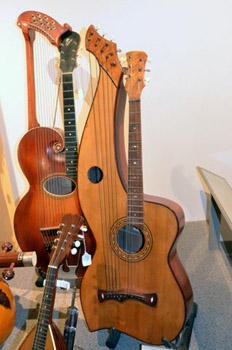 So, when I found out that the Museum of Making Music was about a stone’s throw from Legoland California Resort & Sea Life Aquarium in Carlsbad, I decided to make some time and check out the story on making music. A hidden jewel, it’s a treasure trove of a century of musical instruments and innovations that shaped American popular music.
It’s located in what looks like a modern business park, and I was not sure where the actual museum was hidden, so I just trusted my GPS. It actually worked this time. What was also nice was that parking is free. The museum is open Tuesday through Sunday, from 10 AM until 5 PM, except for major holidays. As you walk inside, a gift shop will be on your right and the reception desk straight ahead. Head for the reception desk and make sure to ask for a group tour of about an hour: it is well worth the expertise. Admission for adults is $8 and includes the docent tour with discounts available for military, students, and seniors.
My guide explains that the museum consists of five galleries that span a century of American musical genres, innovations, and musical instruments and devices. He adds that the focus is on connections between people, instruments, and making music, with each gallery featuring a “breakthrough” instrument – an instrument that changed the course of future music. Oftentimes, the artifact and the current version are displayed alongside a modern version you can play. The interactive areas were great and let you try your musical genius on a variety of instruments, including drums. I found out, and not surprisingly so, that I still have no musical genes or talent, but it didn’t dampen my joy seeing, hearing, and playing through the notes, or perhaps I should say my musical cacophony.
The galleries include:
1890-1909 – America’s Music Industry Comes of Age
1910-1929 – A Long Boom Before the Bust
1930-1949 – The We’ll Try Anything Years
1950-1969 – The Baby Boom Sparks Dynamic Growth
1970 – 1989 – Conglomerates Retire / Technology Inspires


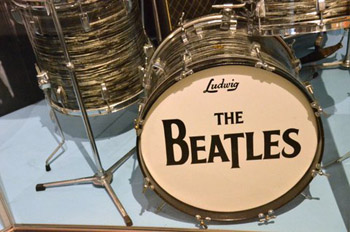 Along the way, I learned about someone I had never heard of as revolutionizing studio drumming. In the 1960’s, Hal Blaine developed a signature drum beat that made him quite popular with producers and songwriters. To keep up with the demand, he used a cartage company to transport his customized drums and hardware to meet the demands of live and studio performances. Songs like Elvis Presley’s “Return to Sender” and Frank Sinatra’s “Strangers in the Night” were recorded on the Hal Blaine Custom Drum Kit.
My favorite exhibit was near the end and focused on international music. With an interactive global map, you can discover what special musical instruments influenced different countries around the world, from Africa and Australia to Russia, Brazil, and Poland. At this point, I only had five minutes left, so I was rushed. However, I would definitely come back for this exhibit alone.
As a non-musician, I whipped through the museum in under an hour and definitely wanted more time. My recommendation is to allow at least 1-2 hours. More if you want to explore the gift shop at the end of your tour.
If You Go:
The Museum of Making Music
5790 Armada Drive
Carlsbad, CA 92008
About the author:
Karin Leperi is an award winning writer and photographer with bylines in over 75 publications that include print, broadcast, and internet media. A gypsy at heart who particularly enjoys bucket-list experiences, she has traveled to 80 countries and is still counting. Specialties include travel, culture, cuisine, nature, adventure and lifestyle. Her photo website is: www.travelprism.com
All photos are by Karin Leperi.
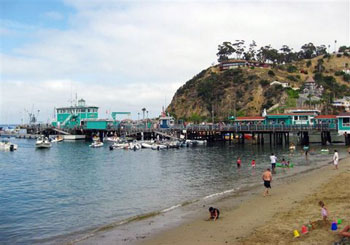
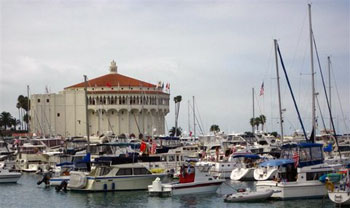 The island is now operated by the Santa Catalina Conservancy. The county of Los Angeles provides administration, including firefighters (who are barged over from the mainland when needed; the local force is voluntary), and police (which are hardly required, according to locals, because crime on the island is seldom a problem due to the lack of escape routes).
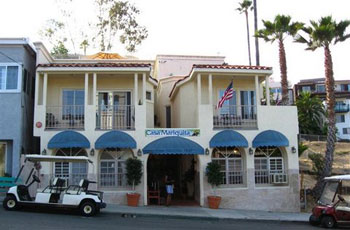 My wife and I, her sister and a friend, booked a package deal in Avalon which included a night’s stay at the Casa Mariquita Hotel on Metropole Avenue and two ferry tickets from Long Beach. This saved us about $20 a couple over booking them separately. Note that when you’re doing your online research to make sure the hotel has a deal with a ferry company leaving from a location convenient for you; they don’t all. Long Beach is closest to Los Angeles.
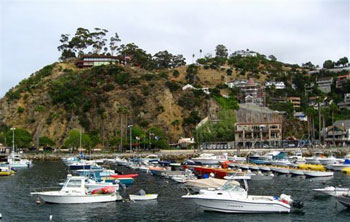 There is a good selection of hotels, as befits an island almost entirely geared to tourism. Our one-night stay at the Casa Mariquita was $175 and represented the lower to mid level what you might expect to pay. It was entirely satisfactory. There is no dining room, but walking to any of the many eateries down the street just adds to the experience.
 The museum was hosting an exhibit on Marilyn Monroe while we were there. The then Norma Jean spent the first year of her married life on Catalina Island while her husband, Jim Dougherty, was training for the Merchant Marine in 1943. Forensic detective work, largely based on her letters home, suggest that the newlyweds lived in an apartment on Metropole Avenue, but it can’t be proven conclusively – another twist to the Marilyn legend.
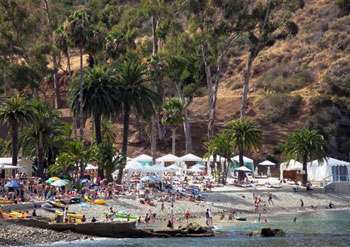
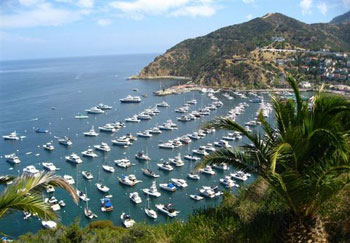 Past the Casino, past the Tuna Club (the oldest sport fishing club in North America, founded 1898), the path continues to wind along the rocky ocean shore to what might be called a “suburb” of Avalon, Descanso Beach, which seems to cater to a younger crowd than the main town with lots of swimming, snorkeling, and kayaking. There is a large restaurant (the Descanso Beach Club) and plenty of boutiques selling beach wear and souvenirs. The area is only open during the tourist season, from mid-April to mid-October.
 The weather in the summer is typical Southern California: Hot and sunny, low humidity, cool breezes. The locals advised us it “gets cool at night”, but that meant a dip into the high teens Celsius (mid 60s Fahrenheit); what a northerner calls “refreshing”.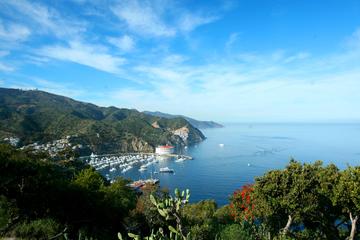
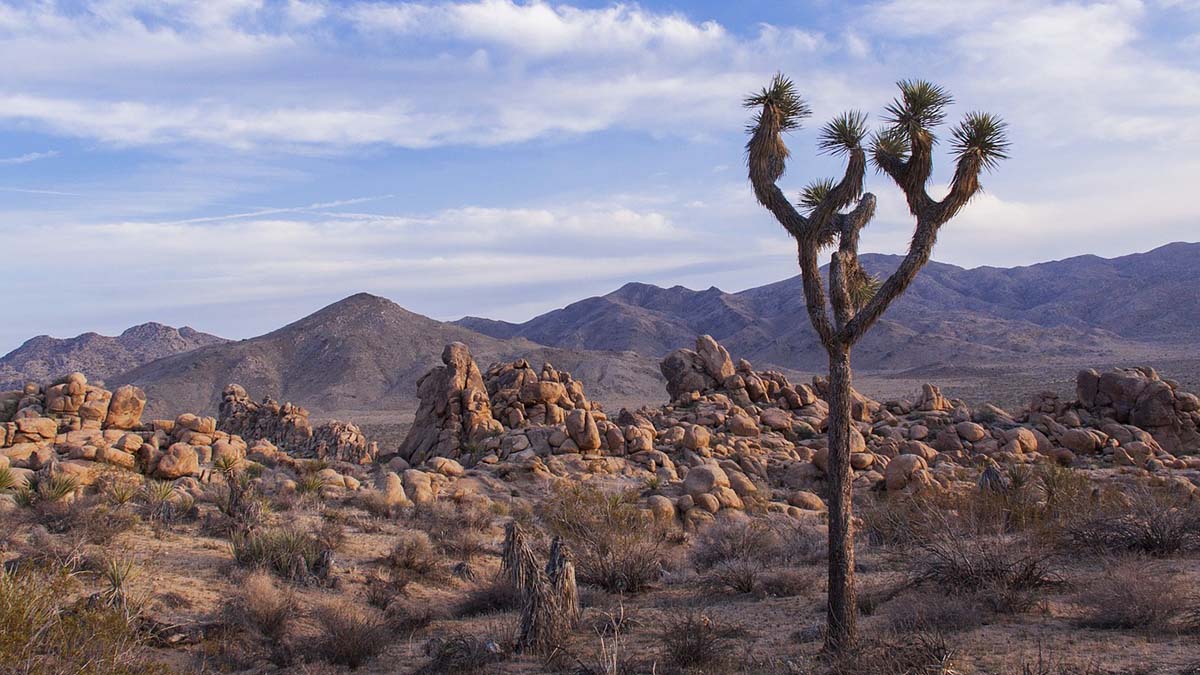
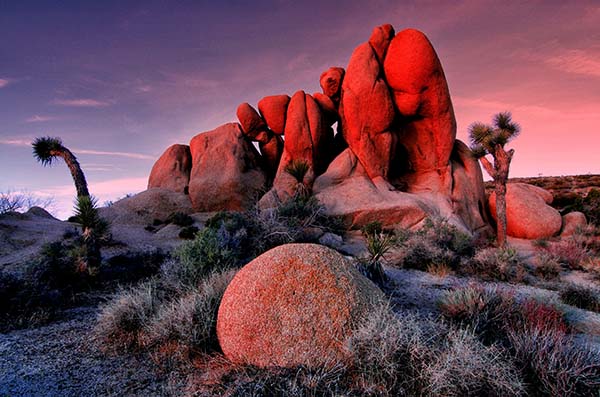

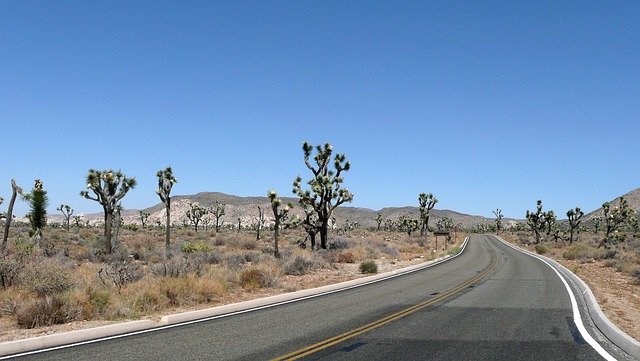
 The silence of the desert is a cliché which does not apply to those found in the Joshua Tree Park. There is a constant, slightly chilly wind which whines in your ear and stirs the dry branches of the creosote bushes, the ocotillo and the yucca. Tiny whispering movements in the sand indicate the movements of insects and small creatures.