Travel Thru History

Historical and cultural travel experiences

  • Home
  • Airfare Deals
  • Get Travel Insurance
  • Writers Guidelines

Starry Nights: A Traveler’s Memoir

stars in sky
By Maureen Moss 

Every night before going to bed I go out onto my terrace to look up at the sky. Almost every night of the year I see thousands of stars above me, and I give thanks for my beautiful home in my own corner of heaven. And of course I always recall other nights when I’ve gazed up at this breathtaking display. Here are some of the most memorable times:

Africa (Etosha National Park)
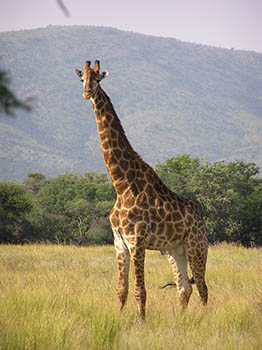
I sit down on a log and look across to the water hole. It is still dark at four thirty a.m. and the sky is filled with millions of stars. There are no bird calls; it is silent. The air feels heavy, damp with dew. In the gloom of pre-dawn I make out ten of us – many are yawning, all look nervous. I detect a fresh scent in the air. Then someone gasps – the silhouette of a giraffe emerges from the shadows at the edge of the clearing, as an orange glow spreads upwards from the horizon. The animal stops, looks slowly from side to side, then steps carefully forward again. After twenty minutes of moving hesitantly towards the water’s edge, it lowers its head, buckles one foreleg, then the second, to reach the cooling liquid. It looks ungainly – kneeling like this in the half-light with its back legs splayed – and helpless, its need for water outweighing its raw fear. I am close enough to see its face. It’s as if every nerve ending is alert; its wide eyes don’t stop flitting anxiously from side to side, its ears twitch like live antennae. Any second a lion could pounce and the giraffe will be helpless. I hold my breath. My heart breaks at this exposed creature’s vulnerability, and I feel privileged to witness the sheer force of nature’s survival instinct.

Australia

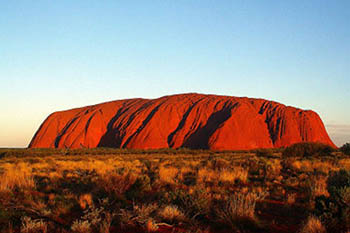
uluruI crawl into my swag, squeeze my daughter’s hand, whisper ‘good night’, then close my eyes. Hours later I open them, and gasp. It looks as if a million tiny lights are just metres above my head, like diamonds on a deep black velvet cloth. I am stunned, and breathless. The silence feels almost heavy, but now my heart begins to pound when I realise where I am and what is going to happen today. I am camping in the outback close to Uluru, a massive, mystical rock in the middle of nowhere. As other bodies begin to stir around me, and our group leader prods our feet, shining his torch to signal our imminent departure, I can barely contain my excitement. I have heard so much about this place, and now at last we are to see it at dawn.

Brazil

The Pantanal is a swamp the size of France, and travelling through it is like being in a virtual reality: so many weird and wonderful creatures inhabit this area. Our ranch, the ‘Arara Azul’, or Blue Macaw, can only be reached by private transport, along a straight, unpaved, dirt road, bordered by marshy water, a journey of some four hours. It is dusk on our first evening. I am walking along a wide, dusty road with Matt, a 19 year old archaeology student.

fireflies at night“Did you see that?” he yells. For the next thirty minutes we are both entranced by our first experience of fireflies. Now I know why people see fairies. Dozens of tiny lights appear from nowhere before us and hover, as if they are staring straight at us, before dashing off.

Still mesmerised, we turn back and I happen to glance skywards. I grab Matt’s arm. ‘Look up’, I whisper, and he raises his head skywards.

‘Oh, my god!’ The sky looks like a carpet of those fireflies, and look! Some of them are even dashing across the sky, just liked they shot off after checking us out.’ I am overwhelmed by the beauty of nature, and of our planet and as I drift off to sleep in my cosy bed later, I am convinced I can still see tiny diamonds flitting across the ceiling of my room.

Mongolia on the Trans Siberian express
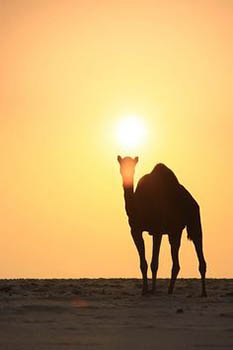
camelAfter six days on a train you are grateful to get off for a short break. We alighted at Ulaan Bataar to head out to a ger camp for two nights under the stars, about an hour’s minibus ride out of the capital. Next morning, a nervously eager party gathered around a corral whilst our guide went off to catch the horses for the day’s expedition. Hours later, flushed with effort, my daughter Georgina declared that she wanted to stay here for a very long time and go galloping across the grasslands again and again. As night fell I climbed to the top of a hill to gaze, uncomprehending, at the vastness surrounding me. Pristine light bathed the distant, empty steppe. Nothing could rob this scene of its solitude. A cluster of yurts far below marked a settlement of sturdy, swarthy horsemen and their families, no doubt settling in for their night’s rest, while planet Earth continued to hurtle around on its celestial path.

If You Go:

Africa: The author traveled on an overland truck from Nairobi to Cape Town, camping in 8 different countries. This is the best way to see Africa for budget travelers who don’t mind a bit of discomfort, and certainly gets you up close and personal with animals on the way.

Australia: You can buy guided tours to Uluru in Alice Springs. Don’t attempt to climb the rock: it is a sacred site for Aboriginal Australians.

Brazil: There are plenty of guided tours in South America. Small group tours can stay at Araras Pantanal Eco Lodge

Mongolia: A ticket for the Trans- Siberian Express from Moscow to Beijing costs around €800. Stopovers can be arranged in Irkutsk for Lake Baikal treks, and Ulaan Bataar to stay in a yurt and go horse riding in the desert.
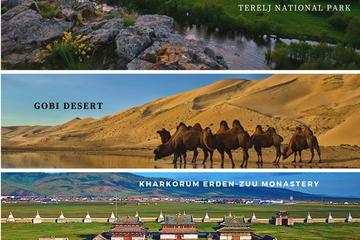

Amazing 9 days adventure in Mongolia

About the author:
Maureen is an award-winning travel writer who lives in Spain, where she hosts her website www.tourguidecourse.com, a course for would-be tour leaders. Her two published books ‘The Tour Guide Life: It Could Be Yours!’ and her first novel ‘More to Life’, are both available on Amazon.

Photo credits:
Stars in night sky by Clarisse Meyer on Unsplash
Giraffe photo by Miroslav Duchacek under the Creative Commons Attribution-Share Alike 3.0 Unported license.
Fireflies by Tony Phan via Unsplash
Photos by Maureen Moss:
Uluru
Fireflies
Camel




Filed Under: World Travel

The Man Behind The Myth

Xmas reindeer

Rudolph the Red Nosed Reindeer and His Creator

by Robert Hale

You Know Dancer and Prancer, and Donner and Blitzen, but do you know Robert May?

It’s that “most wonderful time of the year” when a wide variety of special stories are told. Some are told in churches; some around fireplaces; some at bedside; some on television and movies; some in song.

While certainly not a Christmas Carol, the story of “Rudolph the Red-Nose Reindeer” has become a popular Christmas song. Carols for the most part adhere to the biblical stories that gave us of Christmas traditions. But one theologian said, “The story of Rudolph surely resonates with biblical redemption.”

Well, perhaps, in a way. More “biblically resonant” is the story of how the song came to be such a musical ornament.

The “Story of Rudolph” takes place in the “holy city” of Chicago. In 1939, the powers-that-be at the gigantic catalog and retail company Montgomery Ward were looking for a story that the company could print and give away to children at Christmastime. Robert L. May, one of Ward’s copywriters was assigned the task.

The story of Rudolph didn’t come easily for May. He struggled, as many writers do, for a “hook” – a theme that would capture the imagination of children and then hold their attention. He wanted a name for the reindeer that had a special sound to it – a sound that would stay in the minds of his readers. He had written limericks before. That’s what his superiors at Montgomery Ward’s wanted from him now.

Robert May was a shy, withdrawn person, and his personality is reflected in Rudolph. May decided that a reindeer with a physical abnormality, a character that was an underdog could be made into a hero. However, an underdog reindeer with a glowing nose, did not sit well at first with Montgomery Ward executives. They felt that a red nose would conjure up images of a drunk, something they didn’t want associated with a children’s story. But, May was determined. He went to Chicago’s Lincoln Park Zoo with one of Ward’s artists Denver Gillen, and had him sketch a reindeer — one with a red nose! The artwork won over the skeptics, and Rudolph with a shiny red nose was born.

For starters, Rudolph was not one of Santa’s standby reindeer. He didn’t live with Santa at the North Pole; he lived somewhere else known only to Robert May.

It wasn’t yet a foggy Christmas Eve when Santa initially found Rudolph. Santa was moving through the house when he saw a strange light coming from the little reindeer’s room. Santa peeked in and saw the bright shining nose. He could hardly believe his eyes. A few moments later as Santa was getting back into his sleigh he noticed heavy fog beginning to roll in. Santa made an instant decision; he asked for, and received, permission from Rudolph’s parents to hitch the little guy with the strange bright nose to the front of the team of reindeer.

At the end of the night’s journey around the world in which Rudolph made not one wrong turn, Santa said to Rudolph – in the original poem-story by Robert May “ By YOU last night’s journey was actually bossed. Without you, I’m certain we’d all have been lost!”

And, as the saying goes, the rest became history. Oh, yes, Santa also asked that Rudolph be allowed to move to the North Pole and live happily ever after. We have to assume, mom and dad were invited too.

At war’s end several companies asked to license Rudolph as merchandising character. But Montgomery Ward and Company held on to the copyright. May was hurting financially. His wife had recently died from cancer. He worked up the courage to ask Sewell Avery, the CEO of Wards, if there was any way he, May, could receive some of the royalties the company was receiving from the story. Not only did Avery say “yes,” he turned over all royalties to May, which paid for his wife’s medical and funeral bills.

But Rudolph’s flight didn’t end there. More was on the way. Rudolph would show up on movie screens in 1947 in a nine-minute cartoon. That meant more money in May’s still-hurting bank account. The next “gift” May would receive came from his brother-in-law, Johnny Marks, a songwriter.

Marks penned the musical version of the story, giving us the now well-known version, and in 1949 cowboy star Gene Autry recorded “Rudolph the Red Nose Reindeer.” It went on to sell over two million copies. It is still selling. It is a few thousand copies behind “White Christmas” as the best selling holiday record of all time, but it’s doing very well after all these years. Then in 1964 Rudolph came to the TV screen in a big way, bringing yet more financial stability to Robert May’s life. With Burl Ives narrating, the annual cartoon presentation remains a now permanent “must see” at the holidays.

The CEO at Wards, Sewell Avery could have said “No” to May; he could have kept the royalties flowing into the corporation coffers, but instead Avery demonstrated the “Christmas Spirit” when he turned over all financial gain from the song and character to May.

Now financially well off, having paid off his debts and his wife’s medical accounts and becoming the manager of all things “Rudolph,” May returned to Montgomery Ward in Chicago in 1971 where he remained until his death. He had built a substantial bank account; and he had all the medical care he would need in his final years.

May died in 1976. He lived out his years in relative comfort – a present brought to him on Christmas Eve in 1939 by the little reindeer with a very shiny nose.


About the author:
Freelance writer, Bob Hale is a former Chicago radio and TV broadcaster.

Filed Under: World Travel

The Legend of The Philadelphia Story

scene from The Philadelphia Story

The Movie That Saved Katharine Hepburn’s Career

by Richard Neal

In 1999 The American Film Institute compiled a list of the 50 Greatest Movie Legends. Humphrey Bogart came in as the #1 male star, while Katharine Hepburn was chosen as the top female. Few would dispute her selection as the greatest ever but, as unbelievable as it seems now, this screen legend’s career almost came to a grinding halt only a few years after it began.

After a successful stint on Broadway, Katharine Hepburn broke into movies in 1932 after RKO Studios signed her to a lucrative contract. In her first film, A Bill of Divorcement (1932), she was cast opposite the legendary John Barrymore. She won the Oscar for Morning Glory, only her third picture. When her next, Little Women (1934), broke box-office records around the country, the newfound starlet seemed on her way to a lengthy and prosperous career.

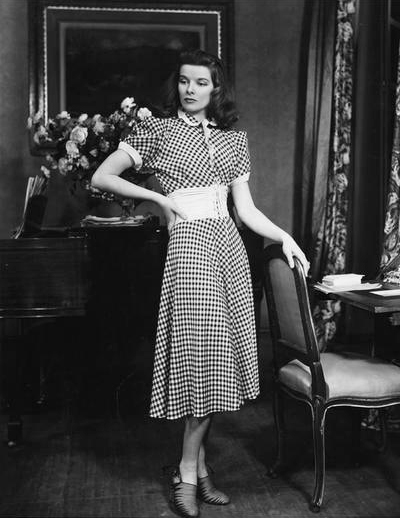
Katharine Hepburn on stageThen rumours began to surface about her arrogant off-screen behavior. She refused to grant interviews or pose for publicity photos. She often wore pants and spurned makeup. When someone stole her slacks she reportedly walked around the studio in her underwear until they were returned. Such raucous behavior appalled audiences at a time when movie stars were expected to be exemplary role models. From 1935 to 1938 nearly all of her movies were flops. The low point came when Photoplay magazine labeled her “box office poison.” When RKO wanted to relegate her to a supporting role in her next film, the indignant actress bought out the remainder of her contract and decided to return to the stage.

Hepburn then approached playwright and friend Philip Barry and asked him to write his next play with her in mind. Barry based the lead character on the public’s perception of Hepburn at the time. The result was The Philadelphia Story, a fast-paced, sophisticated romantic comedy about love, marriage, and the American class system. Tracy Lord, a haughty socialite, is about to marry wealthy businessman George Kittredge. Enter ex-husband C. K. Dexter Haven and tabloid reporters Macauley Connor and Liz Imbrie, all of whom show up on the eve of the wedding. Tracy receives a much-needed lesson in humility as she is forced to choose between her stuffy fiancé, her fast-talking ex-husband, and the brash young reporter.

Kate put up 25 percent of production costs, and co-starred with promising newcomers Joseph Cotten and Van Heflin. The play opened in March 1939 and was a smash. It ran for over 400 Broadway performances and took in nearly a million dollars at the box office. By the end of its yearlong run, Hepburn had earned close to a half million dollars in salary and profits, over seven million dollars in today’s currency.

Hepburn knew that Hollywood would want to make a movie version and persuaded billionaire ex-lover Howard Hughes to buy her the film rights. Sure enough, offers soon poured in from the major studios. Warner Brothers offered a pile of money, Errol Flynn as co-star, and Hepburn the role of producer. She was pondering their proposal when Louis B. Mayer, head of powerhouse MGM, called. His $250,000 bid was not the highest, but he agreed to Hepburn’s insistence that she play the lead and that she would pick the screenwriter (Donald Ogden Stewart), director (George Cukor), and two male co-stars. She demanded Clark Gable and Spencer Tracy, MGM’s two biggest stars, but both were unavailable. Mayer suggested James Stewart, who had risen to the “A-List” for his Oscar-nominated role in Mr. Smith Goes to Washington. Mayer then gave Hepburn $150,000 for the second male actor. She called old friend Cary Grant, with whom she had paired well with in three earlier efforts, and offered him his choice of either of the two leads. He selected the role of Haven, and donated his entire paycheque to the British War Relief Fund. Hepburn took a calculated risk and deferred her salary for 45 percent of the profits.

The Philadelphia Story was shot in only eight weeks during the summer of 1940. Reportedly, no retakes were required.

The opening scene is the stuff of cinema legend. Playboy husband C. K. Dexter Haven (Cary Grant) storms out of a mansion and throws his luggage into a parked car. Soon-to-be ex-wife Tracy Lord (Katharine Hepburn) follows him outside carrying his golf clubs. She breaks one over her knee, and throws the rest at him. Haven is enraged and raises a fist to hit her but instead puts his hand over her face and pushes her to the ground. Expertly directed by George Cukor, the scene immediately demonstrates the relationship between the two leads without a single line of dialogue. It also gave 1940 audiences the satisfaction of seeing the snooty actress knocked flat on her bony derriere.

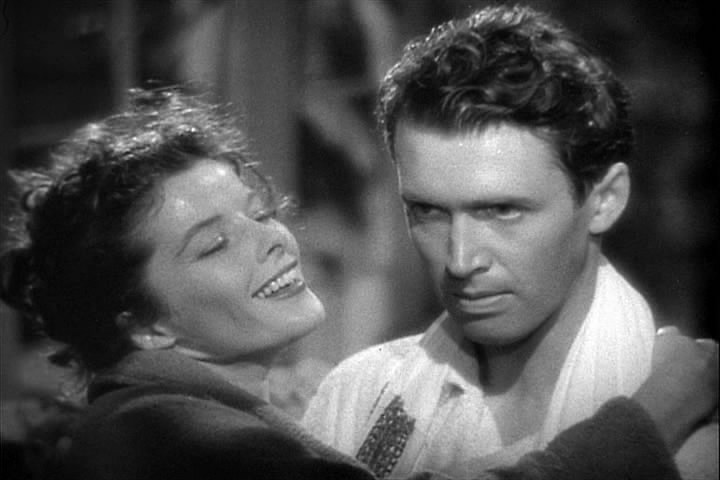
Katharine Hepburn and James StewartThe three leads are brilliant. Before The Philadelphia Story, Cary Grant’s roles had been either drama or slapstick comedy. Here he plays Haven as a wisecracking sophisticate, the first time audiences saw him in this role and the type of character for which he is most fondly remembered today. It’s hard to imagine anyone but Cary Grant playing C. K. Dexter Haven.

Jimmy Stewart drops his usual “aw-shucks” demeanour, and displays a sexiness never seen before. He was reportedly uneasy before shooting a scene where Connor recites love poetry to Tracy, and was sure he would botch the scene. Cukor asked famous playwright Noel Coward, who was visiting the set that day, if he would give Stewart some words of encouragement. Upon meeting the nervous young star, Coward remarked, “I think you’re a fantastic actor.” Bolstered by the accolade, Stewart performed the scene flawlessly.

In spite of the panache of the two male stars, this is Katharine Hepburn’s picture. She glitters in the role that was written specifically for her, delivering witty lines with rapid-fire precision while gorgeous males fall at her feet. In one notorious scene, Tracy and Connor go for a late night swim. Afterward, clad only in a bathrobe, Tracy tells Connor that she has the shakes. “It can’t be anything like love, can it?” he implores. “No, no, it musn’t be. It can’t,” she pleads. “Would it be inconvenient?” he inquires. “Terribly,” she moans. Only Katharine Hepburn could believably deliver that line. Sadly, this was her only movie with James Stewart and her last with Cary Grant.

The excellent supporting cast is nearly as delightful. John Howard is wonderfully uptight as George Kitteredge, Tracy’s opportunistic fiancé, while Virginia Weidler is hilarious as Tracy’s wisecracking younger sister. In an unforgettable scene, she performs “Lydia the Tattooed Lady”, the song made famous by Groucho Marx in At The Circus. Ruth Hussey almost steals the movie as cool photographer Liz Imbrie. She delivers sharp gibes as she calmly watches her man throw himself at another woman.

The movie opened on January 1, 1940 to critical acclaim and was a huge moneymaker for MGM, not to mention its cunning lead actress. It packed Radio City Music Hall for six weeks and grossed over $600,000 at that one location alone.

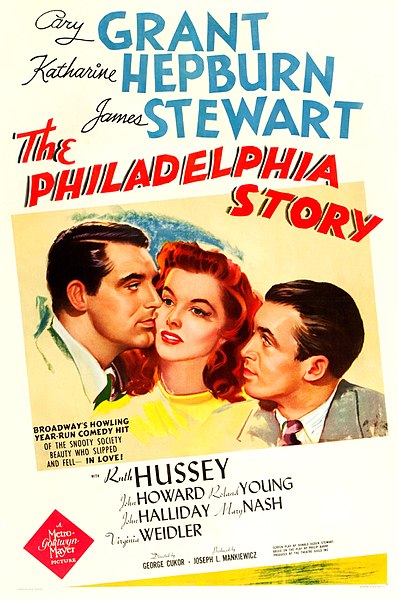
Philadelphia Story movie posterThe following year The Philadelphia Story was honoured with six academy award nominations, including best lead actress, best supporting actress, best picture, and best director. Donald Ogden Stewart won for best adapted screenplay, while Jimmy Stewart took the award for best actor. He later remarked that his Oscar win was “…deferred payment for my work on Mr. Smith Goes to Washington.” Donald Ogden Stewart was not so modest. When handed the award he declared, “I have no one to thank but myself.” In his autobiography years later, however, he wrote that adapting the original play for the screen was the easiest Hollywood job he ever landed.

Hepburn’s gamble had paid off. Almost overnight she was back on top of the Hollywood hierarchy, a position she would occupy for the remainder of her sixty year career. She went on to garner a total of twelve Academy Award nominations, and is the only four time Oscar winner for a lead role, a record that may never be broken.

Often screened on television, The Philadelphia Story is now regarded as a true Hollywood classic. In 1995 the film was deemed “culturally significant” by the Library of Congress and selected for preservation in the U. S. National Film Registry.

By the time Katharine Hepburn passed away in 2009, she was revered as an American movie icon. She is remembered for her independence, her outspokenness, and her refusal to sugarcoat her personality at a time when this was expected of movie stars. Late in life, she downplayed her iconic status, stating, “People have grown fond of me, like an old building.” Perhaps, but if not for her shrewd handling of The Philadelphia Story over 70 years ago, she might be little more than a Hollywood footnote today.

About the author:
Rick Neal is a free lance travel writer and avid movie buff living in Vancouver, Canada. He has been published in Senior Living magazine, www.offbeattravel.com and www.hackwriters.com.

Photo Credits:
Katharine Hepburn photo: Stage Publishing Company, Inc., photograph by Vandamm / Public domain
Scenes from The Philadelphia Story: Trailer screenshot / Public domain
Movie poster: MGM / Public domain

Filed Under: World Travel

Wind Power: Windmills Helped Make History

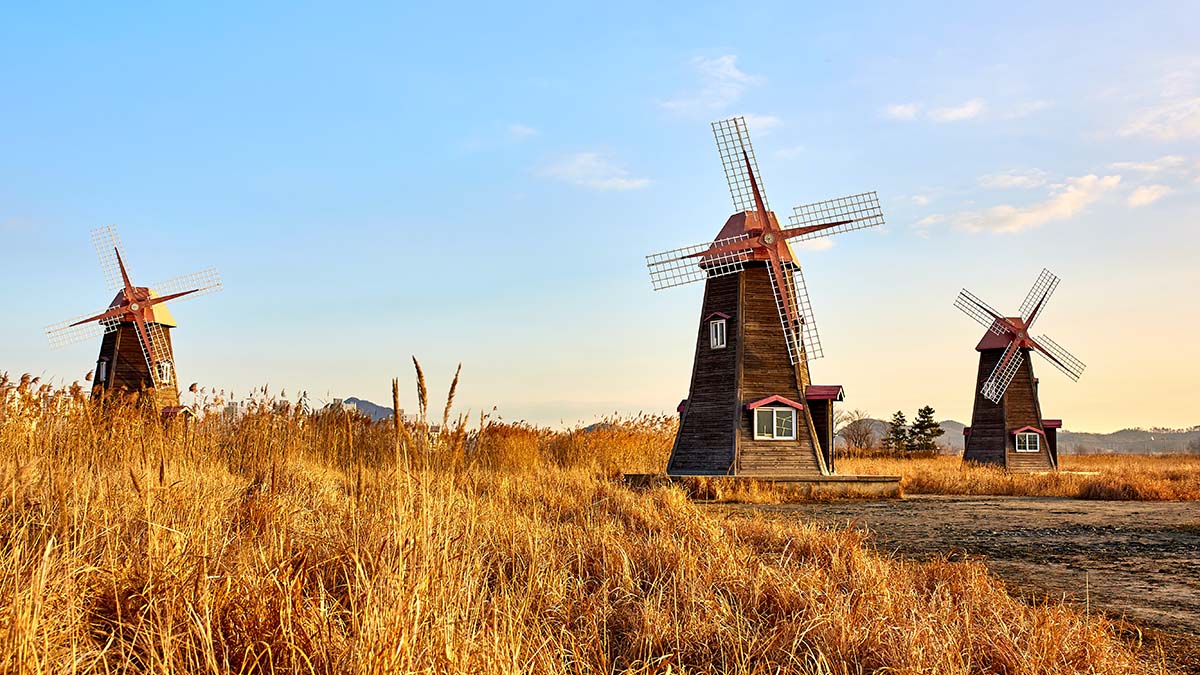
windmills in South Korea

by Keith Kellett

We’re seeing more and more wind-driven generators on the sky-line. This would seem to be an ecologically sound way of producing electricity, but, oddly, I frequently hear them being decried as an eyesore.

I wonder, however, if our descendants will be as keen to preserve them as we are to preserve those old windmills, which used to dominate the countryside from the hill-tops?

windmillWindmills first appeared in Persia in about the 7th Century AD, but were unknown in Britain until the end of the 12th Century, when the idea was brought to northern Europe by the Crusaders. They spread rapidly, for windmills and water mills were the first machines used by man which didn’t depend on his own strength, or that of his animals.

When I lived in East Anglia, windmills were everywhere. Most were disused or in ruins, but some had been preserved. I knew one family who lived in a converted windmill; although many people did conversions of this kind, the miller seldom lived in the mill itself, but in a nearby cottage.

The reason windmills were so prolific in this area was that the countryside is very flat, and there are no swiftly-flowing rivers suitable for driving a water-mill, which was preferred, as it used a more reliable source of power.

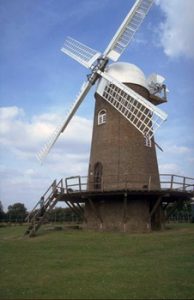
But, there is a working windmill near where I live now, at Wilton, in Wiltshire. (Not the Wilton where they make the carpets; there are two Wiltons in Wiltshire) This was one of the last windmills to be built, and incorporates most of the innovations introduced over the years.

Like many surviving windmills, this is a brick-built mill called a cap or a tower mill, in which only the cap of the windmill rotates to turn the sails into wind. The other type, the post mill, needed the entire structure to be rotated by hand.
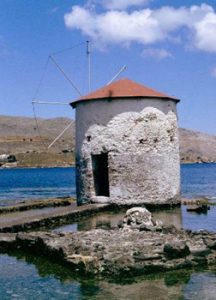
Greek windmillEarlier tower mills required the cap to be turned by hand, using a tail-post; I’ve seen many windmills in Europe which still do this. But, in 1745, the fantail was patented in England. This is the secondary rotary vane which automatically rotates the cap.
I came upon an even earlier form of windmill while on holiday in the Greek islands. These ere fixed structures, and are two of main types. The horse-shoe has a D-shaped plan, with the sail always on the rounded side. Round mills are a later innovation. They were often built in groups, and the miller selected the one whose sails were set closest to the wind!

This isn’t a very satisfactory arrangement, and, in other places, ways were devised to ensure that the sails always faced into wind.

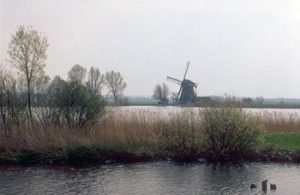
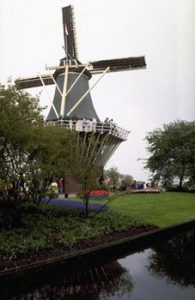
Of course, the place to really see windmills is the Netherlands. But, as our guide once pointed out, if you see a working windmill of the traditional pattern in the Netherlands today, it’s more likely to be a wind-pump. Another interesting piece of trivia she gave us was that, if a mill was picked out in green, the miller’s family were Roman Catholics; if red, they were Protestants, while both colours signified a mixed marriage.

Major Peter Swayne, the custodian of Wilton Windmill, gave me some interesting facts, too. Until 1772, he said, all windmills had ‘common sails’. This is simply a framework to which canvas is attached. Like the sail of a boat, this can be reefed or furled, depending upon the wind velocity … probably why, like a ship, a windmill was frequently referred to as ‘she’.

Andrew Meikle invented sails where canvas was replaced by wooden shutters, which opened automatically if the wind reached a certain speed. This ensured the machinery turned at a constant rate. From this, William Cubbitt developed the patent sail, in 1807 which allowed adjustments to be made without the need to stop the mill.

windmill in Wilton, WiltshireWilton has four sails; two patent sails and two common sails. These turn at about 15 rpm., transmitting power through a right angle to the main shaft, turning at double that rate. The speed is doubled again at the one-ton millstones.

Major Swayne was not only a fruitful source of technical information. He had studied the way of life of those times, too. The miller’s life was often lonely, he said. The mill was usually in an exposed position, maybe some distance from the nearest settlement, located in a more sheltered site. Only in flatter areas could a windmill be near the village without too much penalty.

Then, there was the attitude of the farmers to the miller. A bushel of corn doesn’t yield a bushel of flour, and the most honest miller would be hard put to prove he hadn’t taken more than his due. So, many folk might remark darkly that the miller’s pigs are always fattest!

Whenever the wind was suitable; whenever corn was available to be ground, day or night, the miller worked, and rested on the unpaid days when the wind didn’t blow. He might be able to take an occasional cat-nap as he sat on the spout floor, testing the quality of the flour which came out by ‘rule of thumb’ … that is, by rubbing it between his thumb and forefinger. He had an ingenious device called a warbler, which rang a bell when he needed to go up to the bin floor, to replenish the grain-bins, lest he ‘grind to a halt’.

stopped windmillAlthough windmills can have as few as two, or as many as eight sails, the most popular arrangement was a four-sail mill. When it stopped, the sails usually formed a St. Andrew’s cross, which minimised the stresses on them. But, they could be stopped to make a St.George’s cross. This was normally a sign of mourning, but some devout millers used to turn the sails to this position for a few minutes before starting work.

To stop the sails midway between the two positions meant the miller required assistance; maybe he urgently needed the services of a stone-dresser to clean his millstones. The prominent position of the mill would summon him far more quickly than riding around the countryside to find him.

I recalled hearing about how the Dutch Resistance used a similar code in World War Two, to signal the presence or activities of German patrols.

Few windmills were built in Britain after the mid-19th Century. The repeal of the Corn Laws in 1846 enabled cheaper wheat to be imported. This could be milled by steam power at the docks. Any milling for local requirements would normally be done by the less weather-reliant water-mills.

Although working windmills are now rare, wind-pumps are still in use in many parts of the world, especially in remote places where water needs to be pumped up from a bore-hole.

If You Want to Know More:

Windmill World: www.windmillworld.com
American Windmills: www.windmills.net

About the author:
Having written for fun while serving in the Royal Air Force, Keith Kellett developed his hobby into a business when he retired. He has published in many print magazines, and on the Web. He lives near Salisbury, in the south of England, and is presently trying to get his head around blogging, podcasting and video.

Photo credits:
Windmills in South Korea by: Mathew Schwartz on Unsplash
All other photos are by Keith Kellett.

Tagged With: wind energy, Windmills Filed Under: World Travel

  • « Previous Page
  • 1
  • …
  • 3
  • 4
  • 5

MORE TRAVEL STORIES:

Cost of living in Abu Dhabi

Nauplion, the Fortified City

The Digital Nomad Lifestyle: Finding Fun Wherever You Go

India: A Pleistocene Flashback in Lonar

La Esmeralda, Beautiful Lady of Dubious Repute

Greece: Christmas in Evros

Valletta, Malta

The Mausoleum of Mao Zedong


SEARCH

DESTINATIONS

  • Africa Travel
  • Antarctica travel
  • Asia Travel
  • Australia travel
  • Caribbean Travel
  • Central America Travel
  • Europe Travel
  • Middle East Travel
  • North America Travel
  • Oceania Travel
  • South America Travel
  • Travel History
  • Travel News
  • UK Travel
  • Uncategorized
  • World Travel
facebook
Best Travel Blogs - OnToplist.com

Copyright © 2025 Cedar Cottage Marketing | About Us | Contact | Privacy Policy | Terms & Conditions | Copyright Notice | Log in